%20scale(0.9427609427609428)'%3e%3cpath%20d='M173%2010%20L179%2010%20L184%2027%20C200%2067%20227%2098%20270%20126%20C236%20117%20205%20110%20181%2087%20C163%2071%20151%2050%20145%2031%20L150%2029%20L160%2044%20L154%2023%20L160%2022%20L171%2040%20L165%2014%20L170%2012%20L179%2034%20Z'%20fill='%2300545A'/%3e%3cpath%20d='M29%20120%20C60%20110%20103%20117%20134%20122%20C180%20127%20221%20136%20257%20145%20C200%20155%20125%20168%2058%20167%20L42%20167%20Q26%20167%2020%20162%20L39%20153%20L17%20148%20L15%20137%20L34%20131%20L13%20129%20L15%20123%20Z'%20fill='%2300545A'/%3e%3cpath%20d='M269%20164%20C246%20184%20215%20198%20186%20221%20C148%20253%20118%20281%2091%20297%20L73%20304%20L77%20289%20L55%20297%20Q54%20295%2056%20292%20L75%20272%20L52%20285%20Q47%20287%2047%20283%20C48%20275%2059%20267%2065%20261%20C101%20229%20142%20209%20186%20188%20C216%20176%20245%20168%20269%20164%20Z'%20fill='%2300545A'/%3e%3c/g%3e%3cg%20transform='translate(299.2323232323232%2034)%20scale(1)'%3e%3cpath%20d='M141%2011%20L174%200%20V242%20H142%20V217%20C126%20237%20106%20248%2079%20248%20C30%20248%200%20212%200%20158%20C0%20106%2033%2066%2081%2066%20C105%2066%20127%2077%20141%2095%20Z%20M141%20158%20C141%20116%20121%2093%2083%2093%20C51%2093%2033%20119%2033%20158%20C33%20199%2052%20221%2083%20221%20C120%20221%20141%20198%20141%20158%20Z'%20fill='%23142A2D'%20fill-rule='evenodd'%20transform='translate(0%200)'/%3e%3cpath%20d='M0%2080%20L32%2070%20V108%20C46%2080%2066%2066%2090%2070%20L85%20102%20C56%2099%2033%20122%2033%20163%20V242%20H0%20Z'%20fill='%23142A2D'%20fill-rule='evenodd'%20transform='translate(210%200)'/%3e%3cpath%20d='M0%2072%20H33%20V174%20C33%20204%2046%20220%2071%20220%20C100%20220%20113%20199%20113%20170%20V72%20H146%20V242%20H115%20V218%20C102%20237%2085%20248%2062%20248%20C23%20248%200%20221%200%20177%20Z'%20fill='%23142A2D'%20fill-rule='evenodd'%20transform='translate(322%200)'/%3e%3cpath%20d='M0%2026%20L33%2015%20V72%20H85%20V99%20H33%20V178%20C33%20205%2043%20220%2066%20220%20C73%20220%2079%20218%2085%20214%20V240%20C76%20245%2067%20248%2057%20248%20C22%20248%200%20225%200%20181%20Z'%20fill='%23142A2D'%20fill-rule='evenodd'%20transform='translate(504%200)'/%3e%3cpath%20d='M153%20164%20H33%20C37%20199%2058%20221%2089%20221%20C112%20221%20129%20209%20142%20192%20L157%20214%20C140%20236%20116%20248%2089%20248%20C36%20248%200%20211%200%20157%20C0%20106%2032%2066%2078%2066%20C125%2066%20155%20102%20155%20151%20Q155%20158%20153%20164%20Z%20M33%20139%20H122%20C119%20110%20104%2093%2079%2093%20C54%2093%2037%20112%2033%20139%20Z'%20fill='%23142A2D'%20fill-rule='evenodd'%20transform='translate(610%200)'/%3e%3cpath%20d='M0%200%20H33%20V147%20L112%2072%20H153%20L80%20143%20L162%20242%20H121%20L52%20176%20L33%20195%20V242%20H0%20Z'%20fill='%23142A2D'%20fill-rule='evenodd'%20transform='translate(792%200)'/%3e%3c/g%3e%3c/svg%3e)
%20scale(1)'%3e%3cpath%20d='M173%2010%20L179%2010%20L184%2027%20C200%2067%20227%2098%20270%20126%20C236%20117%20205%20110%20181%2087%20C163%2071%20151%2050%20145%2031%20L150%2029%20L160%2044%20L154%2023%20L160%2022%20L171%2040%20L165%2014%20L170%2012%20L179%2034%20Z'%20fill='%2300545A'/%3e%3cpath%20d='M29%20120%20C60%20110%20103%20117%20134%20122%20C180%20127%20221%20136%20257%20145%20C200%20155%20125%20168%2058%20167%20L42%20167%20Q26%20167%2020%20162%20L39%20153%20L17%20148%20L15%20137%20L34%20131%20L13%20129%20L15%20123%20Z'%20fill='%2300545A'/%3e%3cpath%20d='M269%20164%20C246%20184%20215%20198%20186%20221%20C148%20253%20118%20281%2091%20297%20L73%20304%20L77%20289%20L55%20297%20Q54%20295%2056%20292%20L75%20272%20L52%20285%20Q47%20287%2047%20283%20C48%20275%2059%20267%2065%20261%20C101%20229%20142%20209%20186%20188%20C216%20176%20245%20168%20269%20164%20Z'%20fill='%2300545A'/%3e%3c/g%3e%3c/svg%3e)
Drive agents through real features
Plan, implement, and verify multi-file changes in a production codebase — not just autocomplete snippets.
Hands-on, practitioner-led training that gets your developers productive with agentic coding tools — Claude Code, OpenAI Codex, and the wider ecosystem of AI-native developer tooling. Not a lecture, not toy examples: your team ships real work on your real codebase, and leaves with the workflows, guardrails, and habits that turn these tools into a durable productivity advantage.
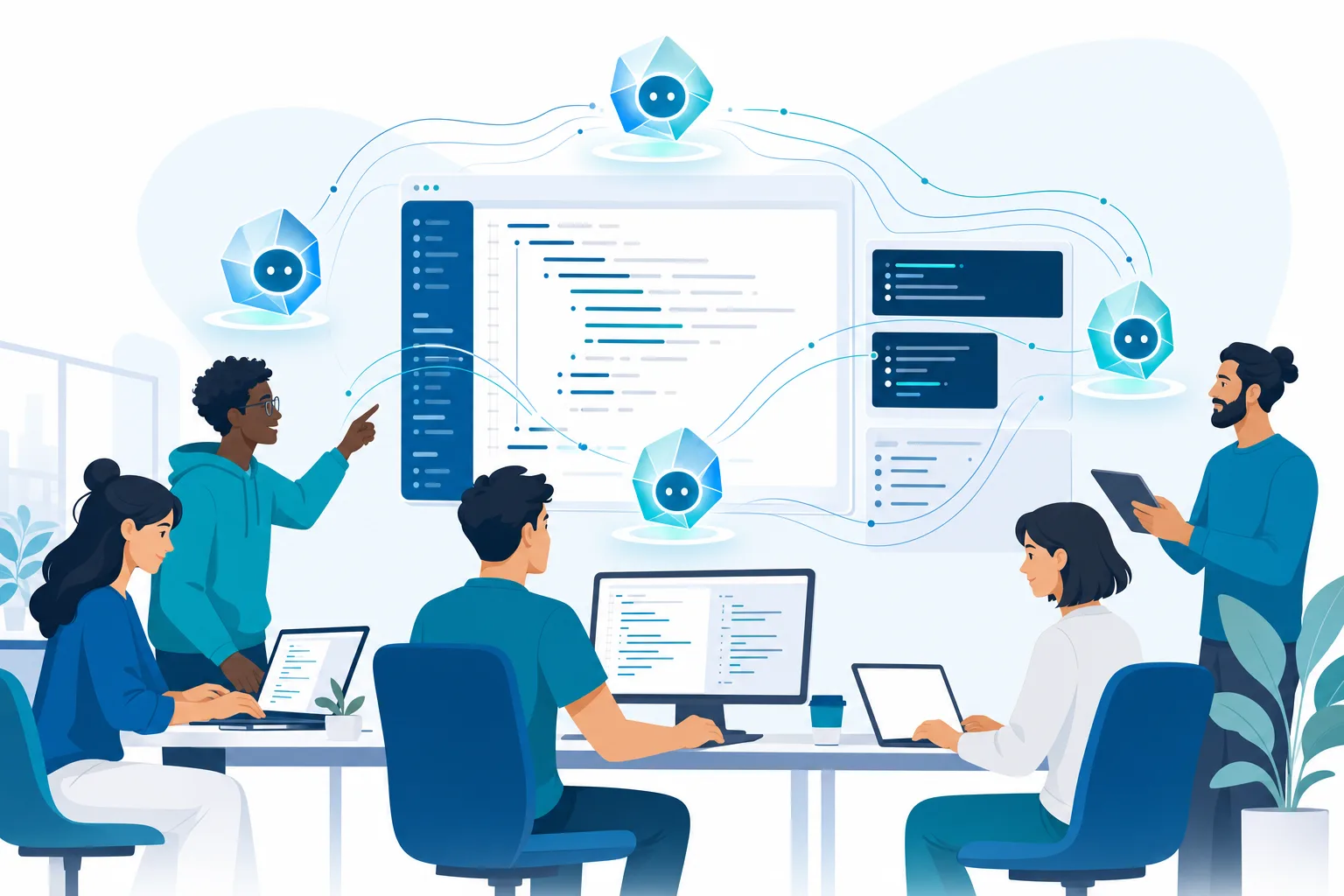
Every exercise runs against your team's actual repositories and stack.
No per-seat pricing. Train up to 12 developers for a single fixed price.
Delivered live over video worldwide, or in person across the UK and US.
By the end of the workshop, every participant has shipped meaningful work with an agent — and knows how to keep doing it after we leave.
Plan, implement, and verify multi-file changes in a production codebase — not just autocomplete snippets.
Write project instructions (CLAUDE.md, AGENTS.md) that make agents effective in large, unfamiliar codebases.
Use tests, linting, and CI as guardrails so agents verify their own work instead of you babysitting them.
Connect agents to your internal tools, databases, and services with Model Context Protocol servers.
Keep code review, standards, and quality intact when the volume of generated code goes up.
Apply permission controls, secrets hygiene, and governance patterns that satisfy security and compliance teams.
The curriculum
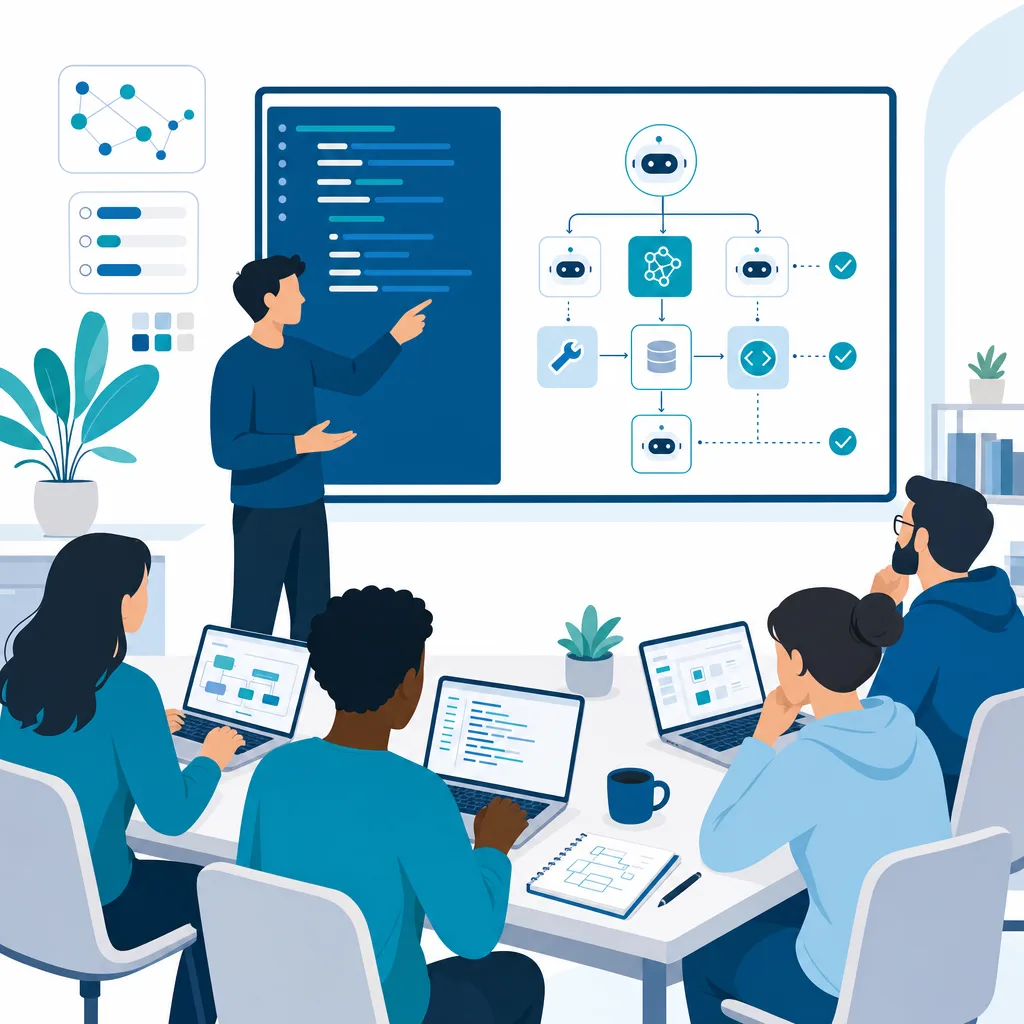
We publish exactly what we teach — no vague module titles. Before the workshop we review your stack and repositories, so every session below runs on your code. Timings flex to fit your team's day.
09:30 — 10:30
10:30 — 11:45
12:00 — 13:00
14:00 — 15:15
15:30 — 16:30
16:30 — 17:00
Formats & pricing
Most training in this space is priced per seat or hidden behind a sales call. Ours isn't: one flat fee per cohort, published here. Every format is delivered live by practitioners who ship production software with these tools every day.
Half day · for CTOs, VPs, and engineering managers
$1,950 / session
Approx. £1,500 · delivered live & remote
Full day · the complete curriculum above
$4,500 / cohort
Approx. £3,500 · flat fee, delivered live & remote
Additional participants $250 each. On-site delivery available — travel billed at cost.
Workshop + 4 weeks of embedded support
$9,500 / team
Approx. £7,400 · multi-team programmes quoted on request
There's no shortage of AI training. Most of it is either a generic classroom course taught on toy examples, or a video library nobody finishes. We built this workshop to be the one that actually changes how your team works on Monday morning.
| Feature | Drutek | Generic classroom course | Self-paced video course |
|---|---|---|---|
| Taught on your own codebase | Toy examples | Toy examples | |
| Led by practitioners who ship production software with these tools | Usually professional trainers | Varies | |
| Flat per-cohort pricing, published up front | Typically per seat | Per seat | |
| Governance & compliance module for regulated industries | Rarely | Rarely | |
| Deliverables you keep: playbook, instructions files, checklists | Slides | Videos | |
| Follow-up support after the session | Rarely | — | |
| Updated as the tools change, week to week | Fixed syllabus | Ages quickly |
Built for engineering organisations that want to adopt agentic coding deliberately — with real productivity gains and without cutting corners on security or quality.
Developers who want to move faster with agents while keeping code review, testing, and standards intact. Any language, any stack — the workflows transfer.
Managers rolling out AI tooling who need consistent, safe adoption across teams — and a clear picture of the ROI to show the board.
Teams in finance, healthcare, and pharma that need agentic workflows to fit within existing governance controls — a core module of the curriculum, not an afterthought.

We'll tell you exactly what to have in place during a short pre-workshop call — typically subscriptions or API access for the tools your organisation has chosen. If you haven't chosen yet, we'll help you pick, and we can run the day across more than one tool.
We're happy to sign an NDA, and all exercises run on your machines and in your environment — your code never passes through ours. For highly restricted environments we can run the day on a representative internal repository or a sanitised mirror instead.
We're tool-agnostic. The day is usually anchored on Claude Code and OpenAI Codex, with IDE-based agents like Cursor and GitHub Copilot covered where teams use them. The workflows and habits we teach transfer across all of them.
Participants should be working developers comfortable in your codebase. Mixed-seniority cohorts work well — juniors and principals get different things from the same exercises, and we calibrate on the day.
Additional participants are $250 each, though we find cohorts of 8–12 get the most hands-on attention. For larger organisations we run multiple cohorts or a tailored multi-team programme — talk to us and we'll quote it.
The published prices are for live remote delivery, which works well for hands-on work. We also deliver on-site across the UK and US — same fee, with travel billed at cost.
Practical notes on operationalising AI, a few times a year. We care about your data. Read our privacy policy.